
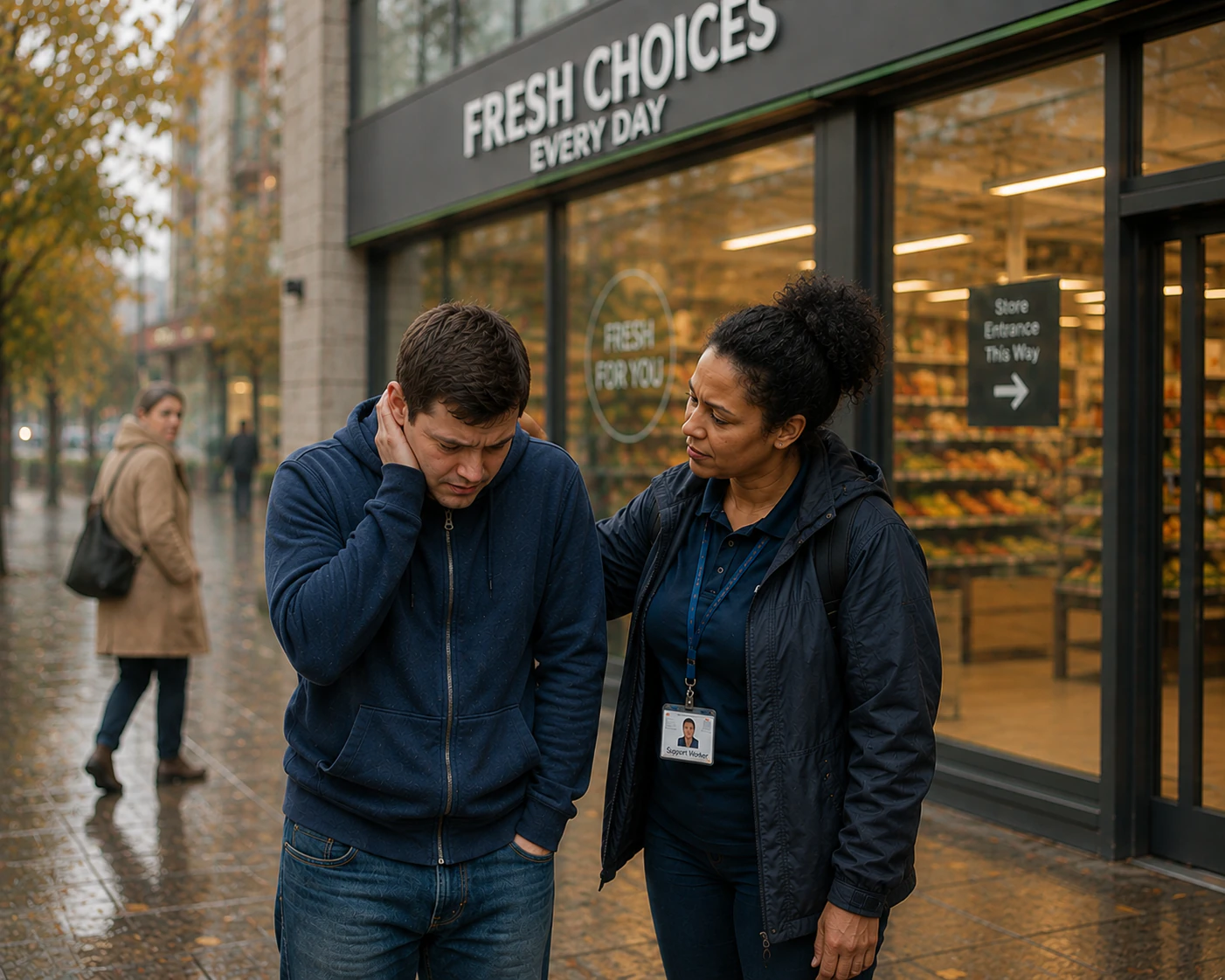

“He’s having a tantrum,” says a passer-by.
Daniel is autistic. Tuesday mornings usually follow a familiar pattern: walk to the supermarket with his support worker, pick up a loaf of bread, then enjoy a hot chocolate before heading home.
But today the routine has disappeared. The entrance has changed. The shelves have been moved. Drilling reverberates through the building.
Daniel freezes. He puts his hands over his ears and stays where he is.
From the outside, it can look like stubbornness. In reality, Daniel is overwhelmed. The sensory overload and unexpected changes have pushed his coping mechanisms to breaking point.
Sometimes, the difference between judgement and understanding is just one conversation. Over the last few years, the word neurodiversity has become part of everyday conversation. We hear it in workplaces, schools and increasingly throughout health and social care. But what does it really mean?
Quite simply, neurodiversity recognises that there is no single “right” way for the human brain to work. Just as we all look different, we all think, learn, communicate and experience the world differently. Those differences are a natural part of being human.
You may hear two words when people talk about neurodiversity.
Neurotypical describes people whose brains process information in ways that society generally expects.
Neurodivergent describes people whose brains work differently. This includes many autistic people and people with ADHD, dyslexia, dyspraxia, Tourette syndrome and other neurological differences.
Neither is better than the other. They’re simply different ways of experiencing the world.
For those of us working in health and social care, understanding neurodiversity isn’t just about learning new words. It’s about understanding people. The better we understand how someone experiences the world, the better we can support them to live a happy, fulfilling life.
Instead of asking, “What’s wrong with this person?” we ask, “What helps this person to be at their best?”
That one small change in thinking can transform the support we provide.
Every one of us has strengths, and neurodivergent people are no different. Rather than focusing on what someone finds difficult, we ask, “What are they good at? What do they enjoy? What helps them succeed?”
An autistic person may have exceptional attention to detail. Someone with ADHD may bring creativity and energy. A person with dyslexia may see solutions others miss. When we build on people’s strengths, we help them grow in confidence and achieve their potential.
The words we use matter. They can help people feel respected, understood and included. That’s why it’s important to listen to how people describe themselves and respect the language they choose.
One of the biggest myths is that neurodiversity only affects a few people. In reality, we work alongside neurodivergent colleagues, support neurodivergent people and meet neurodivergent families every day. When we understand neurodiversity better, everybody benefits. Because this isn’t just about understanding different ways that brains work.
It’s about helping people feel safe.
Helping people feel understood.
Helping people feel that they belong.
And that’s something we can all make happen.
This Week’s Coleman Challenge
Tomorrow, choose one person you support and take a little extra time to understand what matters to them.
Ask yourself:
- What are this person’s strengths?
- What helps them feel calm and understood?
- Is there one small change we could make that would help them have a better day?
Sometimes, the smallest adjustments make the biggest difference.
When we replace assumptions with curiosity, we create places where people feel valued, respected and able to thrive.
And that’s what great health and social care is all about.